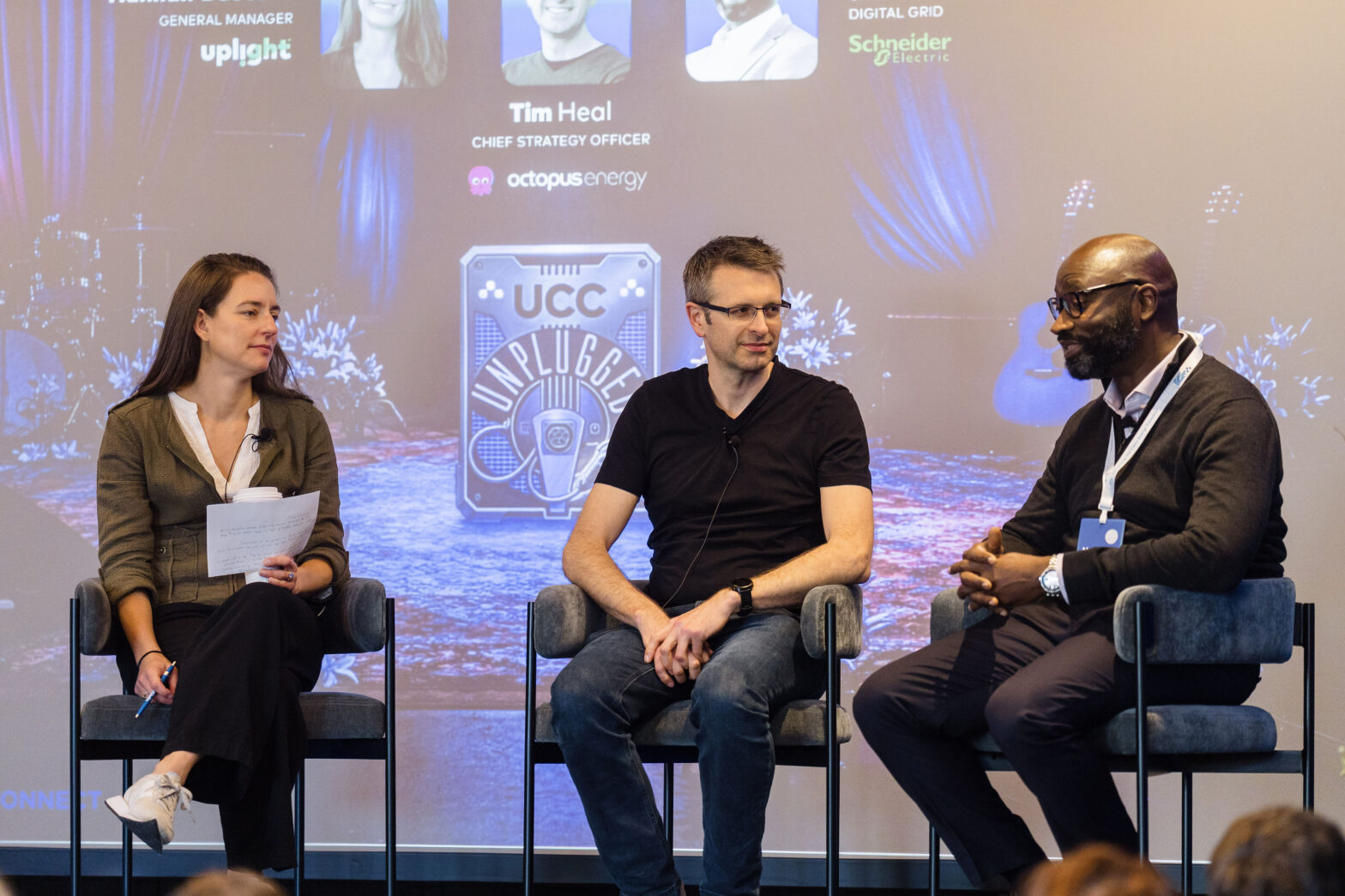
We wrapped up our fifth annual Uplight Customer Connect event (and arguably, the best one yet) last week! We had a jam-packed two days of informative sessions, lively discussion, and a few bulls-eye dart throws at Flight Club.
118 attendees arrived by plane, train, and EV (and sometimes all three!); over half were first-time UCC’ers; and case studies from utilities and connection with industry peers were the most desired outcomes from the event.
Attendees have reported high satisfaction with the event:
“Sessions were informative. Networking was great. Amelia Earhart was outstanding”
“Excellent quality of content for [the] whole group and breakout sessions. Plenty of opportunities for networking. Good event length”
“I thought the venue and events were all fantastic, really good choices and nice size of event overall, I really enjoyed it.”
After 1.5 days and 17 sessions, we’re still processing just how much ground we covered. Here are the themes that stuck with us most.
The Demand Stack Is Moving from Concept to Commitment
The Demand Stack—a framework that values demand-side management programs as coordinated, predictable resources that act as a cornerstone of reliability and affordability strategy—is moving from concept to reality.
During the Demand Stack session, Ryan Hledik from The Brattle Group gave that argument some serious quantitative backbone, sharing analysis showing how a coordinated demand-side strategy could expand one utility’s demand-side management capacity by over 100 MW by 2030. Evergy’s Brian File and Alliant’s Kari Gehrke described how they’re translating the Demand Stack framework into regulatory action and internal buy-in. Utilities are moving to do it now as they plan for the future, and they’re building organizational muscle as they go.
We learned that the Demand Stack takes coordinated, cross-functional effort: it touches program teams, grid operations, customer experience, regulatory, and IT. The utilities making real progress are creating internal engagement loops that keep demand-side thinking embedded across the organization: the goal is for this work to be part of how the business operates, not a silo that surfaces at a planning meeting once a year.
Experience Over Incentives: CX is Key For Scaling Participation
When it comes to getting customers to participate in demand-side programs, experience may matter more than financial incentives.
Customer research shared by Popsicle Labs explored how households with multiple grid-interactive devices actually experience demand response — and found that confusion, friction, and fragmented touchpoints are the real enemies of enrollment and retention. This aligned with what we’ve been hearing from conversations with Octopus Energy, now a majority stakeholder in Uplight. Octopus credits the bulk of their enrollment success not to offering better energy rates than their competitors, but to removing friction from the device enrollment and management experience and delivering genuinely excellent customer service. This has resulted in 60–70% participation rates—compared to often single-digit program participation rates in the U.S..
The implication is significant: even if utilities optimize incentives and rates, clunky enrollment and utility customer experiences are preventing participation at scale. The session on scaling program participation reinforced this—getting to meaningful mass participation requires personalized journeys, smart device detection, and multi-channel outreach that meets customers where they are.
DERMS: Start Mapping the Journey Now, Even If You’re Not Ready to Build
During the DERMS session, Hydro One’s Spencer Gill, Dominion Energy’s Santosh Veda,and Black & Veatch’s Todd Weisrock walked through how they’re approaching the coordination of complex DER portfolios as cohesive grid resources, covering geo-targeted dispatch to ISO market participation.
What stood out across these conversations is how long the DERMS journey actually takes. Procurement, deployment, testing, and scaling to meaningful capacity is a multi-year process—and that’s before accounting for the regulatory and interconnection dynamics that shape what’s even possible in a given territory. To be prepared for load growth, utilities should be planning DERMS (and DSM) roadmaps years ahead.
Getting Specific About the “Why” Unlocks Everything Else
Another theme that surfaced repeatedly across tracks was the importance of precision in defining the key objectives of a utility’s demand-side strategy. Reliability and affordability are universal goals—every utility needs both—but successful programs are built on specific system needs across different geographies and time windows. Utilities seeing demand-side success are tracing a direct line between a program outcomes and precise grid needs.
Until Next Year!
Beyond the sessions, UCC was a reminder of why in-person gatherings matter. The Coors Field tour set a sustainability-minded tone on Tuesday afternoon. The Welcome Reception at La Loma, perched above McGregor Square, gave everyone a chance to decompress and make meaningful connections. And Flight Club darts on Wednesday night turned out to be the right amount of chaos to close out a full day of thinking, asking questions, and collaborating on challenges and opportunities for optimizing the grid.
We came away with sharper thinking, new relationships, and more inspiration to advance the energy transition. We hope to see you next year!